
direct metal haleu production
fueling the nuclear renaissance
High-Assay Low-Enriched Uranium (HALEU) is an essential fuel for many next-generation reactors. Nusano’s proprietary enrichment platform is designed to produce metallic HALEU efficiently and at scale via a simplified production pathway.
NEWS: Nusano HALEU Platform Selected for NRIC Nuclear Energy Launch Pad Program
KEY BENEFITS: Nusano HALEU platform
direct metal enrichment
Metallic & Oxide fuel
Exceptional output
domestic fuel supply
Scalable deployment
small footprint
the haleu supply challenge
Demand Is Growing Faster Than Supply
Advanced reactor activity is growing across small modular reactors (SMRs), microreactors, and other designs that depend on HALEU for smaller cores, longer fuel cycles, and improved efficiency. But U.S. HALEU supply has not yet scaled to match those needs.
This creates a classic chicken-and-egg problem. Reactor developers need HALEU to complete testing, demonstrations, and customer commitments. Fuel producers need clear, bankable demand before investing in enrichment, deconversion, and fabrication capacity. Without fuel, reactor projects slow down; without reactor orders, fuel suppliers hesitate to scale.
The risk is that fuel availability becomes the gating factor for the entire advanced nuclear market. Even promising reactor designs may struggle to secure financing, regulatory confidence, and project timelines if they cannot show a reliable path to qualified fuel.
Breaking the cycle requires building domestic HALEU capacity ahead of full commercial demand while giving reactor developers enough confidence to move forward. A resilient U.S. supply chain can reduce reliance on limited suppliers, improve schedule certainty, and help turn advanced nuclear designs into deployable energy projects.
KEY TAKEAWAYS
The future of advanced nuclear energy depends not only on reactor innovation, but also on reliable access to fuel.
Today, U.S. domestic HALEU production amounts to less than 1 MT per year, far below the 50 MT per year estimated to be needed by 2035.
Reactor innovation cannot scale if qualified fuel is not available in the right form, at the right time, and in sufficient quantities.
HALEU is uranium enriched to between 5% and 19.75% uranium-235
THE NUSANO APPROACH
A New Path to HALEU Production
Nusano is developing a fuel platform that uses advanced separation technologies to enrich uranium and produce metallic HALEU in a streamlined production process.
Nusano’s proprietary techniques and processes separate atoms by mass, allowing for the enrichment of the selected isotope(s). For HALEU, the Nusano platform takes in uranium metal input, enriches and separates the uranium-235 and uranium-238, and outputs HALEU in metallic product form.
Nusano’s HALEU platform is modular and scalable – allowing for fuel supply to increase in parallel with market needs. Each Nusano HALEU unit requires only 1,200 square-feet, and will produce 5.9 MT of HALEU at an anticipated cost below that of current, gaseous centrifuge-based processes.

Each Nusano HALEU unit will produce 5.9 MT/year of HALEU at an anticipated cost far below current, gaseous centrifuge-based processes.
direct metallization
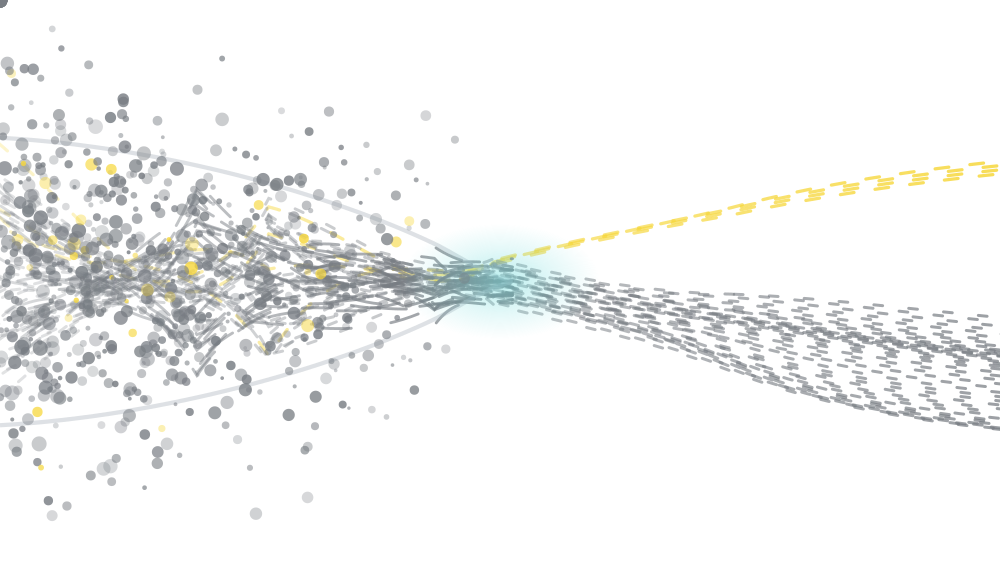
Uranium-235 (U-235)
Uranium-238 (U-238)
Benefits & Impact of Direct Metallization:
Simplicity
Eliminates the UF₆ conversion, deconversion, and metallization required in a gaseous centrifuge production process.
Speed
Achieves full enrichment — from natural uranium to 19.75% enriched material in a single-pass enrichment process.
Efficiency
High feed-to-product ratio delivers breakthrough HALEU production without the toxic fluorinated gas associated with centrifuge-based production.
why metallic haleu matters
A More Direct Path to Advanced Reactor Fuel
Current Technology: Centrifuge Cascade
Conventional enrichment pathways begin by converting uranium into uranium hexafluoride gas so it can be processed in centrifuge cascades. After enrichment, that material typically must be deconverted into a chemical form suitable for fuel fabrication and, for metallic fuel applications, further processed into uranium metal or alloy feedstock.
Known as gas centrifuge enrichment, this method spins hexaflouride gas at very high speeds inside a series of connected centrifuge cylinders known as a cascade.
Because uranium-238 is slightly heavier than uranium-235, the spinning motion pushes more of the heavier isotope toward the outside of each cylinder while the lighter uranium-235 becomes slightly more concentrated closer to the center.
Repeating this separation across many centrifuges gradually raises the uranium-235 concentration from natural levels to the HALEU range of greater than 5% and less than 20%, after which the enriched material can be chemically processed into a solid fuel form for advanced reactors.
At the end of this process, “deconversion” is the step that turns enriched HALEU UF₆ back into a usable solid fuel-manufacturing input. The enriched UF₆ is not itself reactor fuel. It must be chemically processed into the form required by the next fuel-fabrication step, such as uranium dioxide for oxide pellets, uranium tetrafluoride for some salt-fuel pathways, uranium metal for metallic fuel, or another reactor-specific feedstock.
At a high level, deconversion involves controlled chemical reactions that remove fluorine from the enriched UF₆ and convert the uranium into a more stable and fabrication-ready material. The exact process depends on the intended fuel form, but the basic purpose is the same: move HALEU out of a volatile gaseous chemical form and into a solid material that can be stored, qualified, transported, and fabricated under nuclear quality standards.
This makes deconversion a critical link in centrifuge-based HALEU production. Even if enrichment capacity exists, advanced reactor developers still need deconversion capacity matched to their specific fuel form. A supply chain that can enrich HALEU but cannot reliably deconvert it into metal, oxide, salt-compatible feedstock, or TRISO-related material may still be unable to deliver usable reactor fuel.
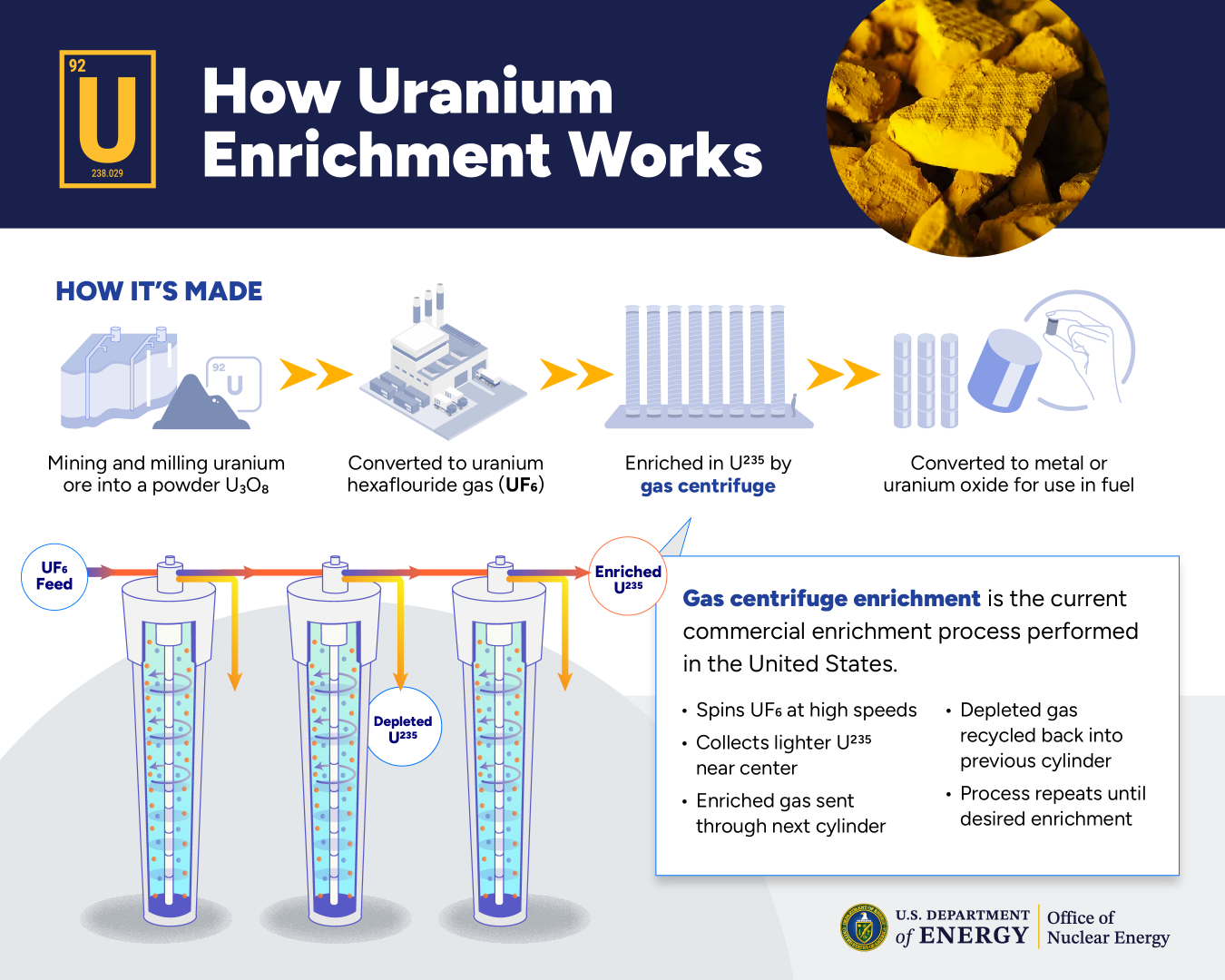
Read More
Energy.gov: Uranium Enrichment, Explained
Disadvantages of gaseous centrifuge HALEU production
Expensive
Requires large, capital-intensive enrichment facilities with centrifuges arranged in cascades, which can take years to license, construct, and qualify for commercial fuel production.
Complex
Depends on uranium hexafluoride conversion and deconversion infrastructure, adding chemical handling risks and extra processing steps before the material can become usable reactor fuel. Importantly, there is currently no deconversion infrastructure for HALEU in the United States.
Hazardous
Preparing uranium for use by gaseous centrifuges produces uranium hexafluoride, or UF₆. If released, UF₆ reacts with moisture in air or human tissue to form highly toxic, corrosive hydrogen fluoride and uranyl fluoride. Exposure can cause severe respiratory irritation, chemical burns, lung injury, kidney damage, or life-threatening harm, requiring strict containment, ventilation, and emergency controls.
Nusano Method: Direct metallization haleu
From Enrichment to Fuel-Ready Metal
Metallic HALEU refers to HALEU produced or prepared in a uranium metal form rather than as uranium oxide, uranium hexafluoride, or another intermediate chemical form.
A pathway that produces metallic HALEU more directly can reduce processing complexity by avoiding some of the intermediate chemical transformations required in traditional fuel-cycle approaches.
Fewer conversion steps can also simplify the handoff between enrichment and fabrication. Instead of moving enriched material through multiple chemical forms before it becomes usable fuel feedstock, metallic HALEU can support a more streamlined pathway from enrichment output to alloying, casting, machining, or other fabrication processes required by a specific reactor design. For example, converting metallic HALEU to an oxide form required by many modern reactors is a simple one-step, non-toxic reaction.

Fewer conversion steps simplifies the handoff between uranium enrichment and HALEU fuel fabrication.
HALEU PRODUCTION comparison: centrifuge vs. direct metallization
CONVENTIONAL centrifuge cascade
STEP 1
U₃O₈ feed
STEP 2
Conversion to UF₆
STEP 3
Centrifuge Cascade
STEP 4
Deconversion
STEP 5
Metallization
RESULT
Metal Fuel Feedstock
Each chemical-form change adds cost, schedule, licensing scope & material loss

DIRECT METALLIZATION
STEP 1
U₃O₈ feed
STEP 2
Conversion to metallic feed
STEP 3

Nusano Platform
Single-pass enrichment
RESULT
Metallic HALEU
99%+ product form
OPTIONAL
Metallic HALEU to oxide form
Upon request
METAL IN. METAL OUT. No deconversion. No gaseous fluorine chemistry. Anywhere.
AI & DATA CENTERS
HALEU's role in Powering the data-driven future
Artificial intelligence, cloud computing, and high-performance data centers are driving a new wave of electricity demand. These facilities need large amounts of power that is available around the clock, not only when the sun is shining or the wind is blowing. As digital infrastructure expands, energy availability is becoming a strategic constraint for technology companies, utilities, communities, and national competitiveness.
HALEU helps address this challenge because many small modular reactors, microreactors, and other advanced nuclear designs require higher-assay fuel to achieve smaller reactor cores, longer operating cycles, and improved fuel efficiency. In practical terms, HALEU can help make nuclear systems more compact, flexible, and better suited to serve energy-intensive users such as data centers, advanced manufacturing sites, and industrial campuses.
For a data-driven future, the promise of HALEU-enabled modular reactors is reliable, carbon-free power that can scale with demand. Instead of relying only on distant generation and congested transmission lines, future data campuses may be able to pair with nearby or dedicated advanced nuclear systems that provide steady clean energy, support sustainability goals, and strengthen grid resilience. The path to that future depends on solving the fuel supply challenge first: without reliable HALEU production, many advanced reactors cannot move from design to deployment.
built for scale
Nusano’s Modular Design Allows Capacity to Expand In-Step with Market Demand
Nusano’s HALEU platform is being designed from the ground up to scale with the market, using compact, factory-built systems that can be manufactured, tested and deployed as modular production units rather than constructed as large, fixed enrichment plants. Capacity can expand incrementally by adding additional systems as customer demand grows, allowing supply to scale in step with reactor deployment while reducing the need for massive upfront infrastructure investment. This modular approach is intended to lower deployment complexity, limit stranded capital risk and create a more flexible path for building domestic HALEU capacity.
%
enrichment
The Nusano HALEU platform enriches natural uranium metal to HALEU in a single pass — no UF₆, no cascade.
MT/unit/year
Each Nusano system produces 5.9 MT of HALEU per year. Systems can be added modularly, allowing supply to grow in steps matched to contracted demand.
square-feet/unit
A Nusano HALEU production unit requires approximately 1,200 ft² per full scale system – a far smaller footprint than centrifuge technologies – enabling compact solutions and co-location opportunities.
%
Metallic Output
The Nusano HALEU Platform’s output is 99%+ metallic HALEU. For metallic fuel designs, the product enters fuel fabrication directly. The deconversion and metallization steps that burden every UF₆-based supply chain simply do not exist.
CONTACT US
Building the nuclear fuel supply chain of tomorrow
Move from Fuel Bottleneck to Fuel Advantage
Nusano’s direct metallization HALEU fuel production platform is designed from the ground up to support American energy independence and enable next-generation nuclear innovation. Contact us to learn more and solve your project’s fuel needs.
LEARN MORE
HALEU Knowledge center
Want to better understand HALEU and the trends shaping next-generation nuclear development?
The Nusano HALEU Knowledge Center brings together topic overviews, technology explainers, and links to leading industry organizations. Whether you are new to HALEU or following advanced nuclear development more closely, the content is designed to help visitors build a clearer understanding of this critical fuel.
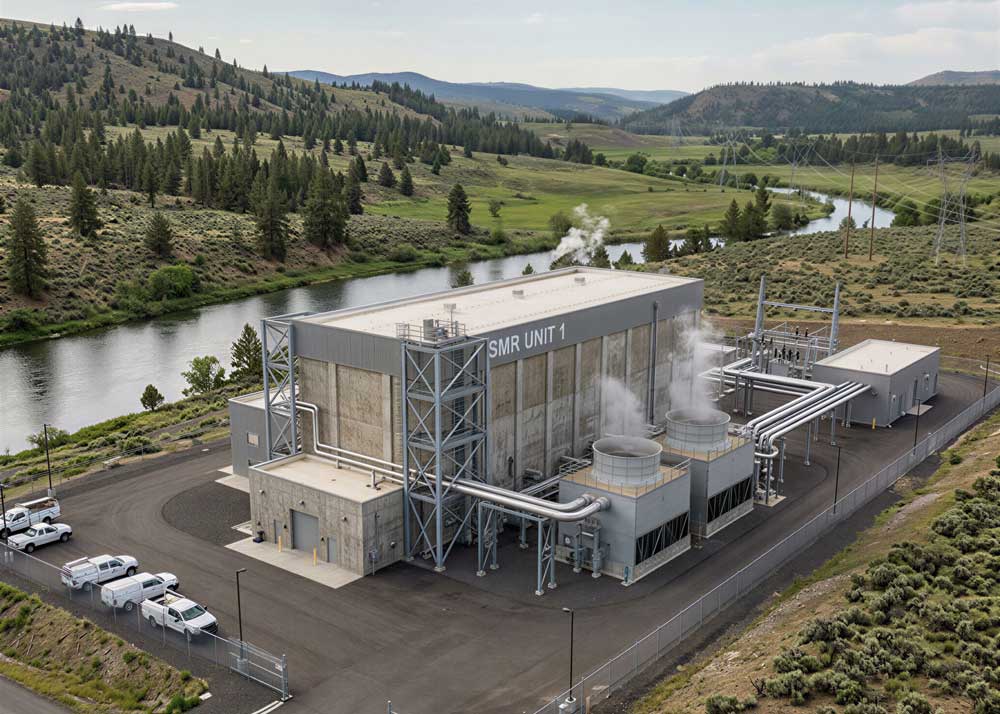
Concept rendering
FREQUENTLY ASKED QUESTIONS
What is HALEU?
HALEU, or high-assay low-enriched uranium, is uranium enriched to contain more than 5% and less than 20% uranium-235, the isotope that helps sustain nuclear fission. It is a key fuel for many advanced reactor designs because its higher energy density can support smaller reactor cores, longer operating cycles, and improved fuel efficiency.
Why do advanced reactors require HALEU?
Many advanced reactors require HALEU because its higher concentration of uranium-235 allows them to generate more energy from smaller reactor cores and operate longer between refueling. This higher fuel density is essential for many small modular reactors, microreactors, and other next-generation designs.
How is HALEU produced?
HALEU is typically produced by enriching uranium so it contains more uranium-235 than conventional reactor fuel, but remains below the 20% threshold for highly enriched uranium. Today, this is most commonly done by converting uranium into uranium hexafluoride gas, separating uranium isotopes in centrifuge cascades, and then processing the enriched material into a usable fuel form. Nusano’s direct metallization process produces metallic HALEU through a streamlined production pathway that eliminates multiple conventional fuel-cycle steps required by traditional enrichment and conversion approaches.
What is uranium enrichment?
Uranium enrichment is the process of increasing the concentration of uranium-235, the isotope that enables sustained nuclear fission. For HALEU, enrichment raises uranium-235 above the level used in conventional reactor fuel—more than 5% but less than 20%—to meet the performance needs of many advanced reactors.
What is metallic HALEU?
Metallic HALEU is high-assay low-enriched uranium produced or prepared in uranium metal form, rather than as uranium oxide, uranium hexafluoride, or another chemical intermediate. This form can support advanced reactor fuel pathways that require uranium metal for alloying, casting, or fabrication.
Why is HALEU in short supply?
HALEU is in short supply in the United States because domestic enrichment, deconversion, fuel fabrication, and transportation infrastructure have not yet scaled to meet expected advanced reactor demand. The shortage is also driven by the transition away from reliance on foreign enrichment services, which has increased urgency to build a reliable U.S. supply chain.
How does mass separation work?
Mass separation is the process of sorting atoms or isotopes based on differences in atomic mass. In HALEU production, mass separation can be used to increase the concentration of uranium-235 relative to uranium-238, producing uranium enriched to the HALEU range.
What role does HALEU play in advanced nuclear energy?
HALEU plays an enabling role in advanced nuclear energy by providing the higher fuel density many next-generation reactors need to achieve smaller cores, longer operating cycles, and improved efficiency. Without a reliable HALEU supply, many advanced reactor designs may face delays in testing, licensing, and commercial deployment.
How is HALEU different from conventional nuclear fuel?
HALEU differs from conventional nuclear fuel because it contains a higher concentration of uranium-235—more than 5% and less than 20%, compared with up to about 5% for most current reactor fuel. That higher enrichment allows many advanced reactors to use smaller cores, run longer between refueling, and achieve better fuel efficiency.
HALEU Knowledge Center
Foundations
Fuel Supply
- U.S. HALEU Supply Chain Explained
- Why Domestic HALEU Supply Matters
- Fuel Challenges Facing Advanced Reactors
Technology
exceptional output. reduced costs. decreased risk.
Contact us to learn more about Nusano’s direct metallization HALEU fuel process