
Published May 28, 2026
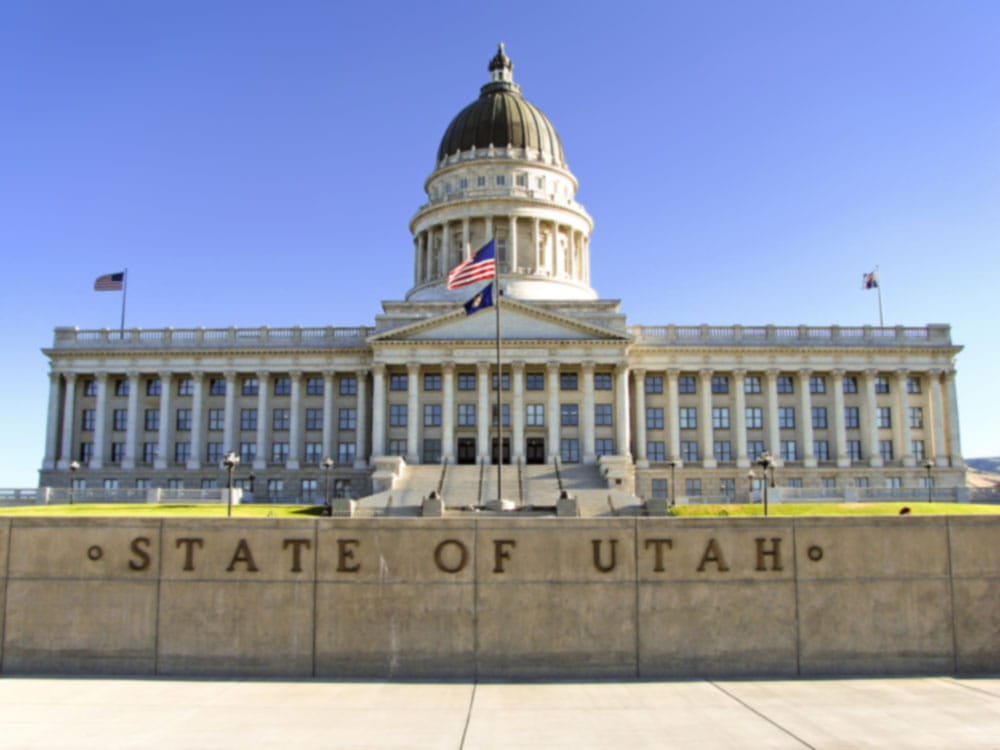
The State of Utah just made it easier for patients with serious cancers to access investigational therapies. In doing so, Utah added another data point to a consistent pattern: the state has repeatedly chosen to prioritize patient access and back it with real resources.
Governor Spencer Cox signed Senate Bill 222 (SB 222) in March 2026, expanding the state’s Right to Try law, effective May 6. For radiopharmaceutical companies, SB 222 is the latest in a series of deliberate choices, from economic development tax incentives (link, link) to a $4 million workforce investment, that signal Utah has decided innovation in this space is worth backing, not just welcoming.
News Update & Analysis
presented by:


What Changed
Previously, Right to Try in Utah was limited to patients with terminal diagnoses. SB 222 replaces that threshold with “eligible illness,” meaning any serious or life-threatening condition where a physician determines the patient has exhausted conventional options. That one change meaningfully widens the door for cancer patients, including those with aggressive or late-stage disease who don’t yet meet a terminal prognosis.
The law explicitly covers both investigational drugs and devices, with updated definitions that capture modern delivery methods, a meaningful clarification for radiotherapeutics which often depend on specialized injectables or device-enabled administration.
Manufacturers who provide products under this pathway must file an annual report with the state’s Health and Human Services Interim Committee, covering patient volumes, indications, and adverse outcomes. Patients enrolled in formal FDA clinical trials are excluded, keeping the compliance burden limited to compassionate-use cases outside of trial enrollment.
What It Means for Radiopharmaceutical Companies
The expanded eligibility is particularly relevant for radiopharmaceuticals, where the target patient population — aggressive or late-stage cancers — may no longer need to clear a terminal threshold to seek access. That earlier entry point could increase the volume of compassionate-use requests companies receive and generate real-world data that informs physician awareness and commercial strategy over time.
Right to Try is not a revenue pathway. Participation is voluntary, supply diversion requires careful management, and trial enrollment must be protected. That said, for companies with an established production platform and clear internal policies, the law creates an option to build early relationships with clinicians and patients that may matter downstream.
The annual reporting requirement is manageable and useful. Here, Utah seeks to thread the needle: reducing friction for innovation without abandoning accountability. Even high-level, aggregated outcome data can build the kind of evidence base policymakers and health systems rely on when evaluating emerging therapies.
For companies evaluating where to locate research, production, or early-access programs, the regulatory clarity and openness provided by SB 222 to emerging modalities is a real differentiator in site-selection decisions. The law also works in concert with federal oversight, by tying eligibility to FDA Phase 1 completion and active investigations.

Utah Right to Try
- “Eligible illness” defined as serious or life-threatening condition
- Covers both investigational drugs and devices
- Company participation is voluntary
- Annual reporting requirement
- Patients enrolled in formal FDA clinical trials are excluded
A Hub Taking Shape at Lake Park
Utah’s life sciences sector already has real scale. More than 1,300 health-focused companies call the state home, supplying 182,000 jobs, and generating $21.6 billion in annual GDP impact, according to a report released by life science trade associations BioUtah and BioHive. From here, the question isn’t whether Utah belongs on the life sciences map. It’s whether it can become the leading address for radiopharmaceutical innovation specifically.
At the center of that answer is the Lake Park Medical Innovation Campus in Salt Lake City.
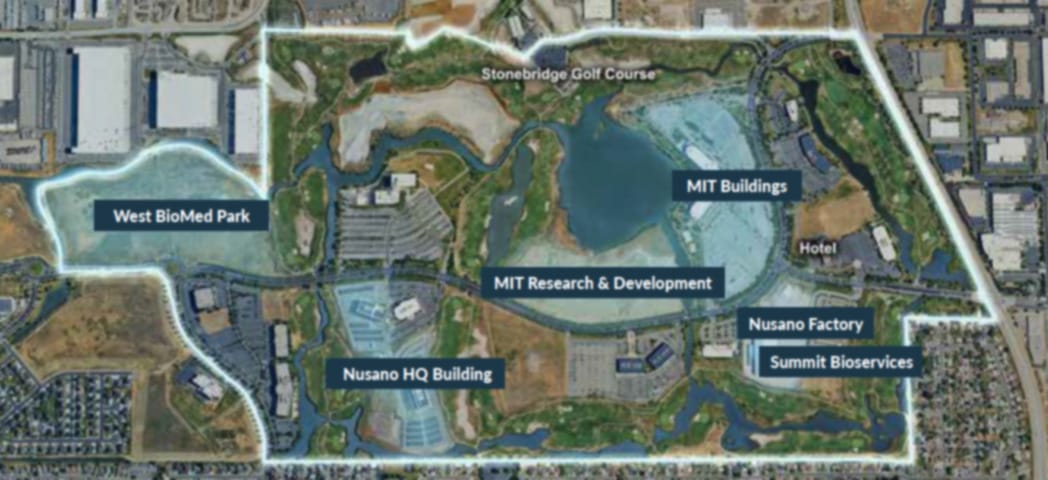
The Lake Park Medical Innovation Campus is located 10-minutes south of Salt Lake City International Airport and just 15-minutes away from Salt Lake City’s vibrant downtown
Developed by the Wasatch Group, Lake Park is purpose-built to integrate the full medical ecosystem — from research and production through clinical application — with cancer treatment as its organizing focus.
“At the Lake Park Medical Innovation Campus, we’re building a vibrant new home for the health care community to innovate,” said John Dahlstrom, executive vice president of Wasatch Property Management. “Collaboration is built into the heart of all we are doing. We are actively working to attract complementary companies to the campus to contribute to something larger than any one company could accomplish alone.”
The anchor tenant of the campus is Nusano, a medical radioisotope producer bringing a first-of-its-kind production platform online to supply a rapidly growing cancer of cancer drugs known as radiotherapeutics. Its 190,000-square-foot facility, coming online this year, will have the capacity to produce up to 12 different radioisotopes simultaneously, giving drug developers access to supply that has historically been difficult to secure at the scale and diversity needed for R&D and clinical programs.
That production infrastructure is already attracting the surrounding ecosystem. Ratio Therapeutics, a radiopharmaceutical drug developer, and Summit Bioservices, a biostorage provider, have both located to the area — drawn in part by proximity to Nusano’s supply platform.
At the Lake Park Medical Innovation Campus, we’re building a vibrant new home for the health care community to innovate. Collaboration is built into the heart of all we are doing. We are actively working to attract complementary companies to the campus to contribute to something larger than any one company could accomplish alone.
The clinical demand is already in Utah too. Huntsman Cancer Institute at the University of Utah is one of the nation’s leaders in theranostics, with radiopharmaceutical trials open or in development across brain, breast, prostate, lung, and pancreatic cancers. That clinical infrastructure, just minutes from Lake Park, means drug developers locating here aren’t just near a supply source, they’re near the patients, physicians, thought leaders and trial teams that put therapies into practice.
A state committed to patients with facilities dedicated to cutting edge cancer research, a purpose-built innovation campus, a first-of-its kind radioisotope production platform, a growing cluster of complementary companies, and now SB 222, the Salt Lake region is no longer just a candidate for radiopharmaceutical leadership. It’s building the infrastructure to claim it.
If You’re Evaluating Utah
- Read SB 222 as a signal, not just a statute. Utah is telling the industry it wants to be the home for this work — and it’s backing that message with policy that supports both patient access and responsible oversight.
- Think about supply chain proximity. Radiotherapeutic programs depend on isotope supply that is timely, reliable, and diverse. Having production infrastructure on the same campus — not hundreds of miles away — changes the calculus for R&D planning and clinical timelines.
- Engage the ecosystem early. The companies already at Lake Park and those evaluating it are building relationships that will matter when clinical programs scale. Co-location creates collaboration that a distant site-selection decision forecloses.
If you’re a radiopharmaceutical developer, drug sponsor, or research organization looking for a production partner and a place to grow, the conversation starts at Lake Park. Contact Alex Dahlstrom at adahlstrom@wasatchgroup.com to learn more about the campus.
Download brochure
Lake Park Medical Innovation Campus
West Valley City, Utah
The contents of this news analysis are provided for informational purposes only. This article is not intended as medical or legal advice.